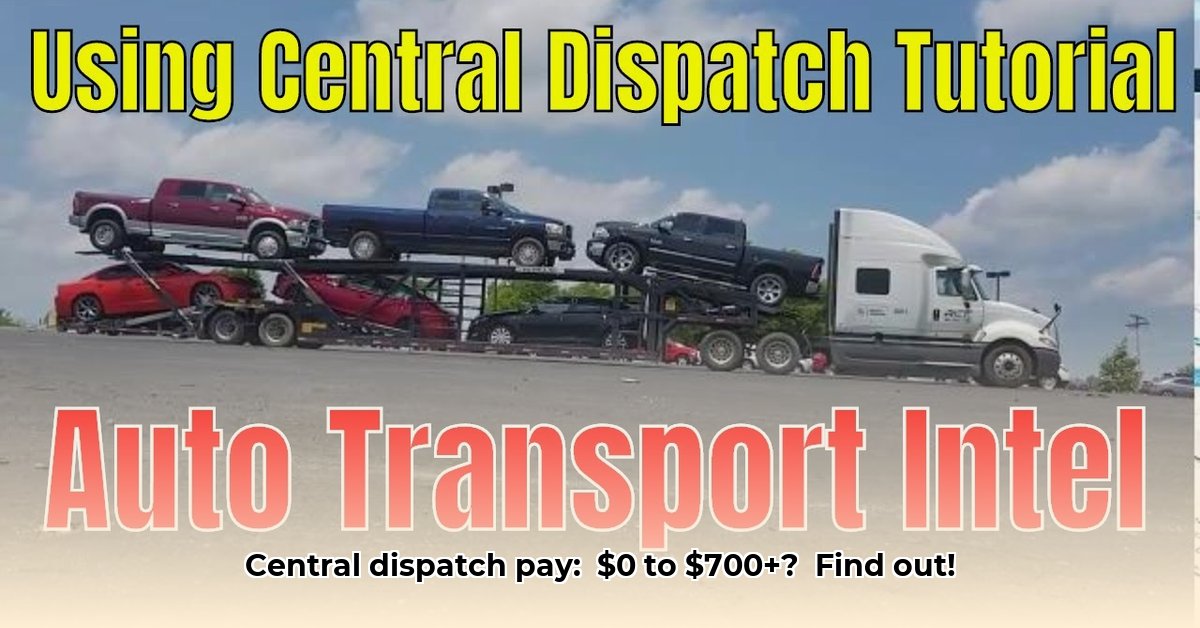
Central Dispatch's payment structure for car hauling isn't a simple flat rate. Earnings vary considerably, influenced by several key factors. Understanding these factors is crucial for maximizing your income. This article breaks down the complexities of Central Dispatch's payment system, providing insights into how much you can realistically expect to earn.
Decoding the Payment Puzzle: Key Variables
The amount Central Dispatch pays per car isn't fixed; it's a dynamic system. Several variables interact to determine your final payment.
Distance: This is the most significant factor. Longer distances mean higher payments due to increased fuel costs, wear and tear on your vehicle, and more driver time. Short trips may yield a few hundred dollars, while long hauls can easily exceed $700.
Vehicle Type: Transporting a luxury car or a specialized vehicle like a classic muscle car requires more care and often specialized equipment (like enclosed trailers), leading to higher payments compared to hauling a standard sedan.
Urgency: Expedited requests, demanding quick delivery, typically command higher prices due to the need for immediate action and potential schedule disruptions for the driver.
Supply and Demand: As with many markets, the ratio of available drivers to transport requests significantly impacts rates. High demand with limited drivers pushes payments upwards, while an oversupply of drivers can depress payments.
What's in it for the Carrier?
Central Dispatch charges carriers a monthly subscription fee. However, the actual earnings per car depend entirely on the price negotiated for each job, a price set by the broker. Reports indicate that long-distance hauls can generate anywhere from $0.48 to $0.67 per mile, resulting in payouts ranging from hundreds to over $700+, depending on distance and other factors.
The Broker's Balancing Act: Pricing Strategies
Brokers must balance attracting customers with competitive rates while ensuring profitable compensation for both themselves and the carriers. They carefully consider several factors when determining pricing, including the carrier's costs and their own profit margin. Undercutting competitors could potentially lead to lower payouts for carriers.
Central Dispatch's Quick Pay: A Convenient, But Costly Option
Central Dispatch offers a "Quick Pay" system for faster payments, but this convenience comes at a cost—typically a 3% fee on the total transport cost. This fee is factored into the price brokers offer and therefore influences the carrier's net earnings.
Central Dispatch Advantages
Despite the variable payment structure, Central Dispatch provides several benefits:
Streamlined Efficiency: The platform automates many tasks, saving time and reducing paperwork for both brokers and carriers.
Increased Transparency: Real-time tracking and monitoring enhance transparency and ensure timely deliveries.
Expanded Network: Central Dispatch connects carriers with a broad network of clients and job opportunities.
Areas for Improvement
Some top-tier carriers avoid Central Dispatch due to inconsistencies in the quality of drivers available to brokers. The platform's lack of guaranteed access to the most experienced and reliable drivers is a current limitation.
The Bottom Line
Central Dispatch's payment per car is highly variable, depending on a complex interplay of distance, vehicle type, urgency, and supply and demand. Understanding these factors is essential for maximizing earnings.
How to Negotiate Better Rates on Central Dispatch Load Board
Central Dispatch's payment system operates as a dynamic market. While you can't control all variables, strategic approaches can help you improve your negotiation position and secure better rates.
Understanding Market Fluctuations
Supply and demand are paramount. High load-to-truck ratios (LTR) indicate high demand, allowing carriers to negotiate higher rates. Conversely, low LTRs signify a surplus of trucks, leading to lower payments.
Geographic Advantage
Focusing on high-demand regions improves your negotiation leverage. Central Dispatch's load board provides data to identify these areas.
Leveraging Data: Your Secret Weapon
Analyze Central Dispatch's load board data to identify trends and predict peak demand periods. Tracking LTRs over time provides valuable insights for strategic bidding.
Key Takeaways:
- Market dynamics, specifically LTR, directly impact rates.
- Focusing on high-demand regions is crucial.
- Data analysis from the load board is essential for effective negotiation.
- Strategic planning and vehicle positioning are key.
- Effective communication and negotiation skills remain vital.
Optimizing Your Approach
- Strategic Bidding: Time your bids to maximize your chances of securing higher-paying loads.
- Know Your Costs: Calculate your minimum acceptable rates based on operational expenses.
- Relationship Building: Cultivate relationships with shippers and receivers for long-term benefits and potential higher rates.
Beyond the Load Board: Long-Term Strategies
For sustained success, consider:
- Diversification: Work with multiple shippers to reduce reliance on any single client.
- Predictive Modeling: Incorporate economic data to anticipate market fluctuations and LTR movements.
- Technological Advancement: Utilize route optimization tools and fleet management software.
Negotiating better rates on Central Dispatch requires understanding market dynamics and leveraging data-driven strategies. A combination of consistent planning, data analysis, and adaptable negotiation techniques is key to achieving long-term success.